Coming from the sunny shores of Tenerife to the changing seasons of Norway, doctoral research fellow Oscar Soler is embarking on a new adventure—exploring the physics of our closest star at the Rosseland Centre for Solar Physics (RoCS).
News
On the 12th of August, 2026, despite the mostly cloudy sky, Oslo was able to see a partial solar eclipse.
From 21 to 24 September 2026, the ISWAT team studying the origins of spectral irradiance held its annual meeting at RoCS.
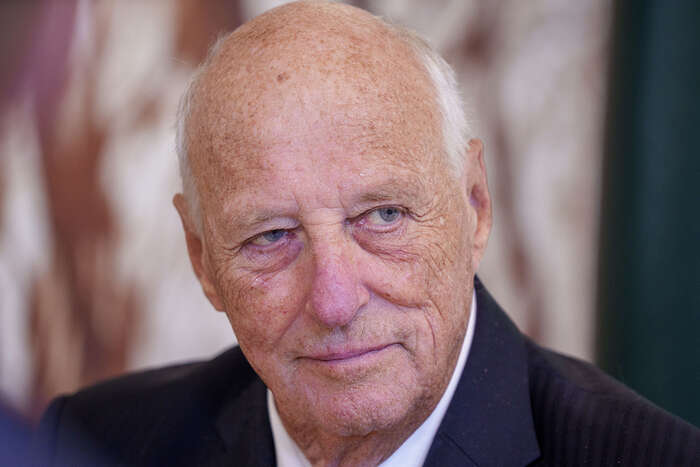
In memory of His Majesty King Harald V
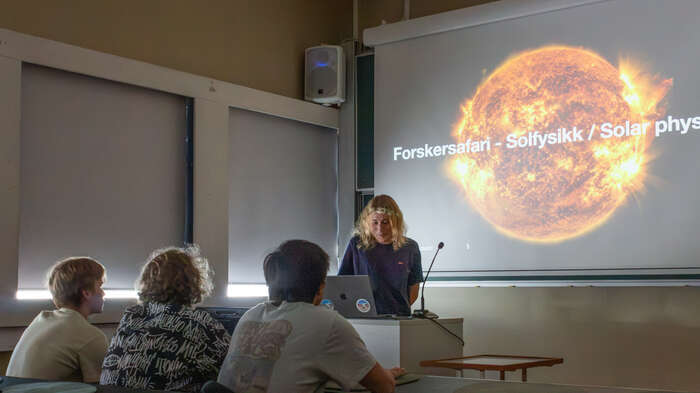
On the 11th of August, 2026, ITA was visited by first-year Physics and Astronomy bachelor's students to learn about what kind of research goes on at the only astrophysics department in the country!
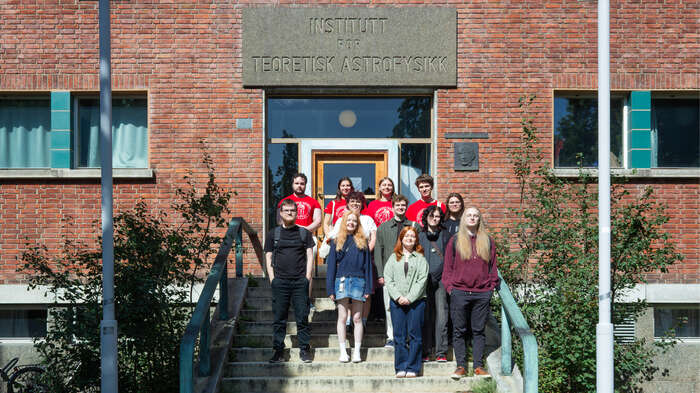
On the past Tuesday, August 11th of 2026, ITA welcomed its new master's students!
José Ricardo Correia arrived in Oslo in September 2025 to become a postdoctoral researcher at ITA. A Portuguese physicist with a master’s (2016) and PhD (2022) from the University of Porto, he now works with the Cosmology group to model the violent phase transitions that may have rippled through the infant Universe.
When we look up at the Sun, we see a brilliant disk that seems unchanging. Inside its atmosphere, however, invisible forces constantly reshape plasma, launch jets, and create dazzling bursts of light.
Experiencing a total Solar eclipse is a highlight for many solar physicists. For RoCS researchers Reetika Joshi, Pooja Devi and Guoyin Chen, the Solar MHD 2026 meeting in A Coruña combined scientific discussions on solar eruptions with a spectacular total Solar eclipse on the Spanish coast.
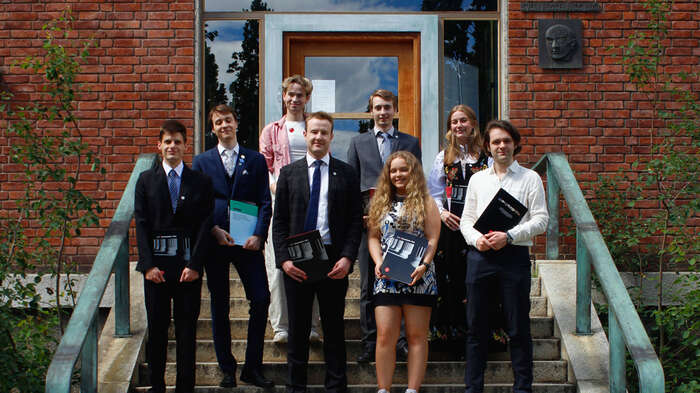
On Thursday, 18 June 2026, ITA celebrated nine students who successfully defended their master’s theses. Family, friends, supervisors and staff joined the party to mark this milestone.
A planned centre on the Sun and space weather has been invited to submit a full application in the Research Council of Norway’s Centres of Excellence (SFF) call.
The Sun’s invisible magnetic fields shape everything from solar flares to space weather at Earth. At RoCS, postdoctoral fellow Harsh Mathur is developing new tools to read these fields from the light we observe.
The internationally respected researcher in celestial mechanics and orbital dynamics, Professor Kaare Aksnes, died in Lillehammer on 22 February 2026, at the age of 87. He was a professor at the Institute of Theoretical Astrophysics, University of Oslo, from 1988 until his retirement in 2008. He chaired the University of Oslo’s almanac committee and edited Almanakk for Norge (The Almanac for Norway) from 1993 to 2013. In 2006 he was awarded the King’s Medal of Merit in gold.
The SST’s exceptional spatial and temporal resolution is a key reason she chose to work at RoCS. Meet Pooja Devi, postdoctoral researcher.
Algerian solar physicist visited Rosseland Centre for Solar Physics.
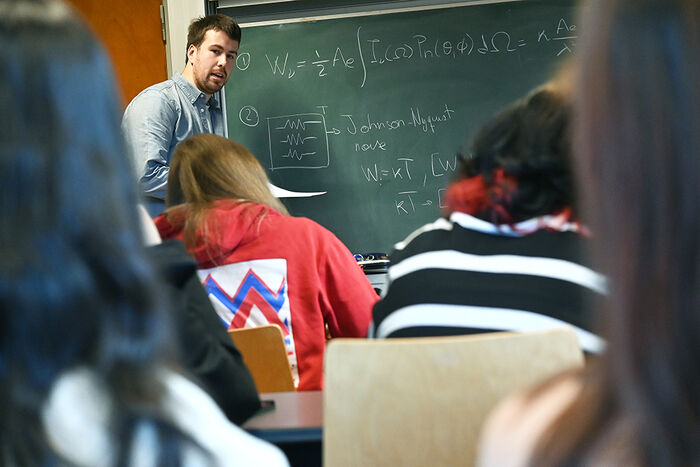
– Good teaching sparks curiosity and makes a difference, says Ignasi Josep Soler Poquet.
The Research Council of Norway has awarded a FRIPRO Young Researcher grant of NOK 10 million to ReCon² — "Resolving the Solar Convective Conundrum," led by Andrius Popovas at RoCS - Rosseland Centre for Solar Physics.
With a diverse academic background across several countries, Yixiao Zhou primarily focuses on computational stellar physics.
"Being involved with science is a fulfilling endeavor, and astrophysics takes it further by exploring phenomena in both space and time" - Ana Isabel Silva Martins, new PhD student in cosmology.
The prestigious 2025 Giancarlo Noci Early Career Researcher Prize has been awarded to Valeriia Liakh at RoCS.
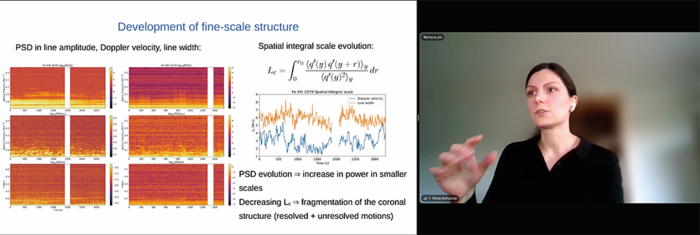
Researcher Petra Kohutova, who has been with RoCS since 2018, receives funding for the project MultiSCORE: Multi-Scale Structure of the Coronal Environment.
With a rich academic background from esteemed institutions, Valeriia Liakh's work is driven by her passion for computational plasma astrophysics.
Dean Solveig Kristensen signed a collaboration agreement at the Italian embassy in Oslo on May 12. This marks an important milestone for space weather forecasting in both Norway and Italy.
Five years into its mission, Solar Orbiter has captured a stunning new image of the Sun. This detailed view reveals the Sun’s million-degree hot atmosphere, known as the corona, as seen in ultraviolet light.
A partial solar eclipse will occur on Saturday March 29. 2025. The eclipse is visible in Norway.